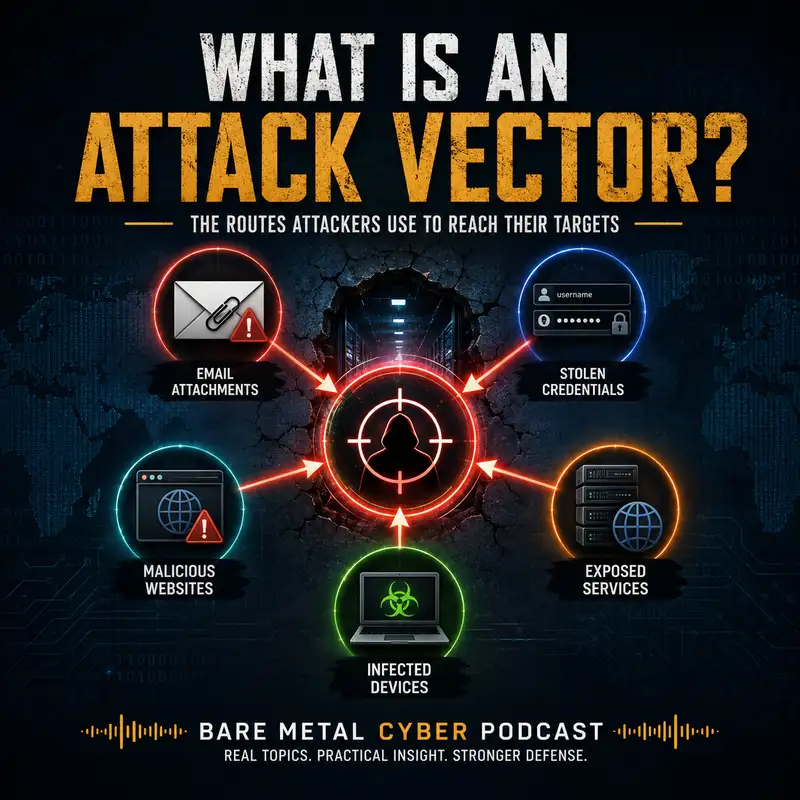
What Is an Attack Vector?
An attack vector is the route, method, or mechanism an attacker uses to gain access to a system, deliver malicious content, or influence a user. Exam scenarios often require candidates to identify the vector before selecting the most effective preventive control. Common attack vectors include phishing messages, stolen credentials, malicious websites, infected removable media, vulnerable internet-facing services, and compromised third-party connections. A phishing email may be the vector used to deliver malware, while an exposed remote-access service may allow entry through password attacks. Defenders reduce exposure by combining patching, secure configuration, multifactor authentication, filtering, user awareness, network segmentation, and continuous monitoring. Produced by BareMetalCyber.com, where you’ll find more cyber audio courses, books, and information to strengthen your educational path. Also, if you want to stay up to date with the latest news, visit DailyCyber.News for a newsletter you can use, and a daily podcast you can commute with. And dont forget Cyberauthor.me for the companion study guide and flash cards!