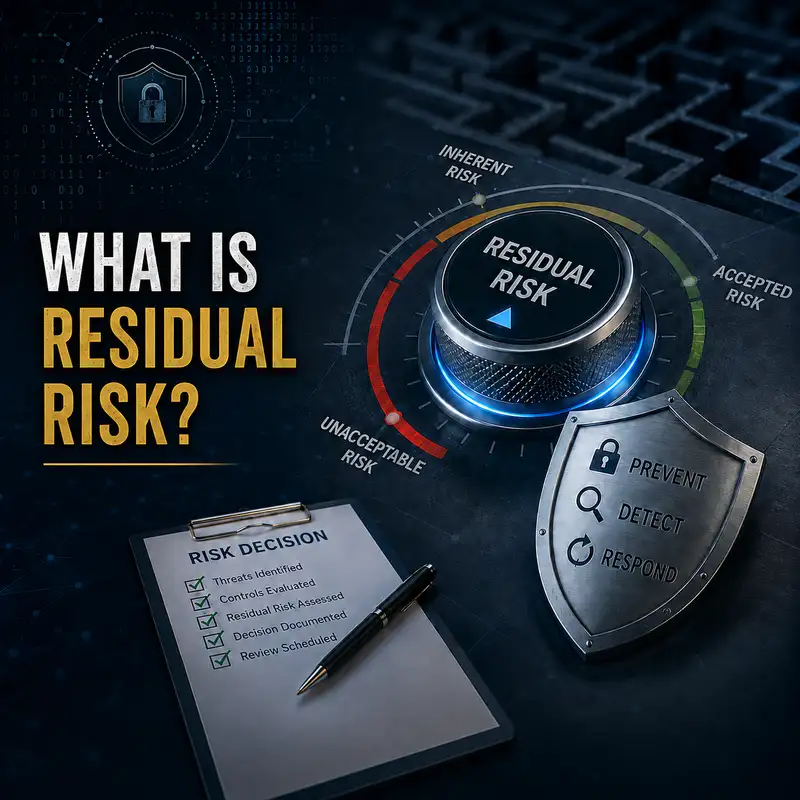
What Is Residual Risk?
Residual risk is the portion of risk that remains after security controls have been selected and implemented. Certification exams frequently ask candidates to distinguish residual risk from inherent risk, which exists before controls are applied. For example, encryption, monitoring, access restrictions, and backups may reduce the likelihood or impact of data loss, but they cannot guarantee that loss will never occur. Management or an authorized risk owner must evaluate whether the remaining exposure falls within the organization’s risk tolerance. If it is unacceptable, additional controls, risk transfer, process changes, or activity avoidance may be required. Residual risk should be documented, communicated, reviewed after major changes, and monitored to confirm that assumptions remain valid. Produced by BareMetalCyber.com, where you’ll find more cyber audio courses, books, and information to strengthen your educational path. Also, if you want to stay up to date with the latest news, visit DailyCyber.News for a newsletter you can use, and a daily podcast you can commute with. And dont forget Cyberauthor.me for the companion study guide and flash cards!